What is decoupling? The method US claims China used to conceal its 'secret nuclear test'
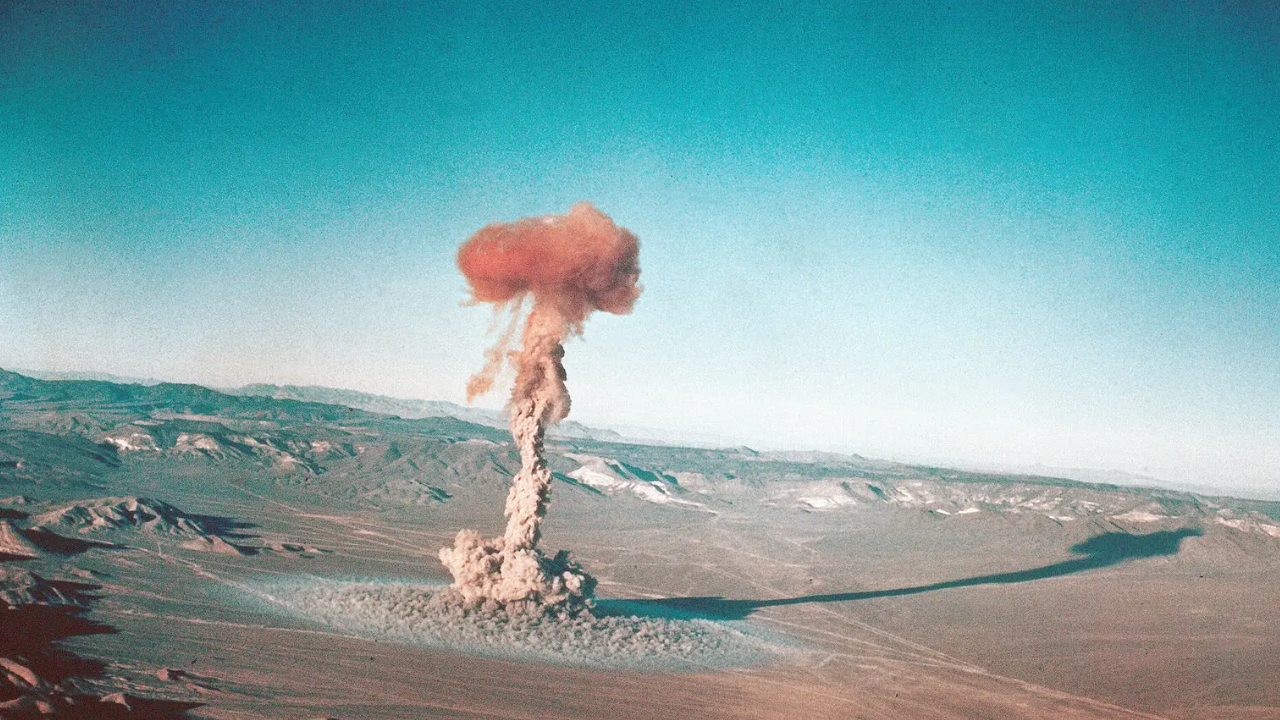
A senior U.S. intelligence official has warned that China may have used a technical trick called “decoupling” to hide a nuclear explosion from the world’s monitoring systems. The claim, if true, raises fresh concerns about the reliability of existing verification tools and the transparency of nuclear powers.
Decoupling is a method that reduces the seismic signal produced by an underground explosion. By detonating a device in a specially prepared cavity, the surrounding rock can absorb much of the energy that would normally travel through the earth and be picked up by seismometers. In simple terms, the blast is muffled, making it look like a much smaller event or even a natural earthquake.
The technique is not new. It has been studied for decades as a way to conceal the size of underground tests. The key ingredients are a deep borehole, a buffer material such as sand or gravel, and a carefully engineered charge placement. When the charge goes off, the buffer absorbs the shock wave, and the surrounding rock does not transmit a strong, clear signal.
The alleged secret test
U.S. analysts say they have identified a series of low‑magnitude tremors in a remote region of western China that match the pattern expected from a decoupled explosion. The tremors were recorded over a period of weeks in early 2024, but their size – roughly 0.3 on the Richter scale – was far below what would be expected from a weapon‑grade nuclear device.
According to the intelligence brief, the seismic data, combined with satellite imagery of new drilling activity, suggest that a test may have been conducted in a cavernous underground facility. The U.S. claims the site was deliberately chosen to minimize detection, using a deep shaft and a sand‑filled cavity to decouple the blast.
Chinese officials have not confirmed any such activity. In past statements, Beijing has repeatedly asserted that it adheres to the Comprehensive Nuclear‑Test‑Ban Treaty (CTBT) and that any underground work is for civilian purposes, such as mineral extraction or geological research.
Why the method matters
If the United States is correct, decoupling could undermine the global monitoring regime that relies on a network of seismic stations, infrasound sensors, and satellite observations. The CTBT’s verification system assumes that any nuclear explosion will produce a detectable seismic signature. A successful decoupled test would demonstrate a loophole that other states could exploit.
The potential impact is twofold. First, it could embolden a country to develop or refine nuclear weapons while avoiding international scrutiny. Second, it would force the monitoring community to invest in new detection technologies, such as underground acoustic arrays or more sensitive gravimetric sensors, to close the gap.
Experts note that decoupling is technically challenging. It requires precise engineering, extensive drilling, and a deep understanding of local geology. Not every nation has the capability to build a reliable decoupled test site, but the claim suggests that China may have reached that level.
International response
The allegation has prompted a measured reaction from diplomatic circles. While some allies have called for a formal inquiry at the United Nations, others stress the need for restraint until more evidence is presented. The United Nations Office for Disarmament Affairs (UNODA) has reiterated its commitment to the CTBT and urged all parties to cooperate with the International Monitoring System.
In Washington, lawmakers have asked the intelligence community for a detailed assessment of the technical evidence. A bipartisan group of senators has also introduced a resolution to increase funding for next‑generation seismic and satellite monitoring tools.
Meanwhile, Beijing has dismissed the accusations as “unfounded speculation” and warned that external pressure could damage strategic stability. The Chinese foreign ministry emphasized that any attempt to politicize technical data would be counterproductive.
The debate over decoupling highlights a broader challenge: how to verify compliance in an era of advanced concealment techniques. Scientists are already exploring complementary methods, such as detecting radioactive gases that may leak from underground cavities or using high‑resolution radar to spot subtle ground deformation.
For policymakers, the key question is whether to treat the allegation as a warning sign that the verification system needs reinforcement, or as a political maneuver that could inflame tensions. Either way, the issue is likely to shape future arms‑control negotiations and the allocation of resources for monitoring infrastructure.
In the coming months, the international community will watch closely for any new data that either confirms or refutes the U.S. claim. If additional evidence emerges, it could trigger a formal review of the CTBT’s verification mechanisms. If the allegation remains unproven, the discussion may shift toward broader confidence‑building measures between major powers.
Regardless of the outcome, the conversation around decoupling underscores the importance of transparent scientific analysis in the realm of security. Accurate, openly shared data can help reduce misunderstandings and prevent the escalation of mistrust.
The episode serves as a reminder that the tools used to enforce global norms must evolve alongside the technologies that can potentially evade them. As nations continue to develop sophisticated underground capabilities, the task of keeping the world’s nuclear landscape visible and accountable grows ever more complex.