Three suspended Congress MLAs join BJP ahead of Assembly elections in Assam
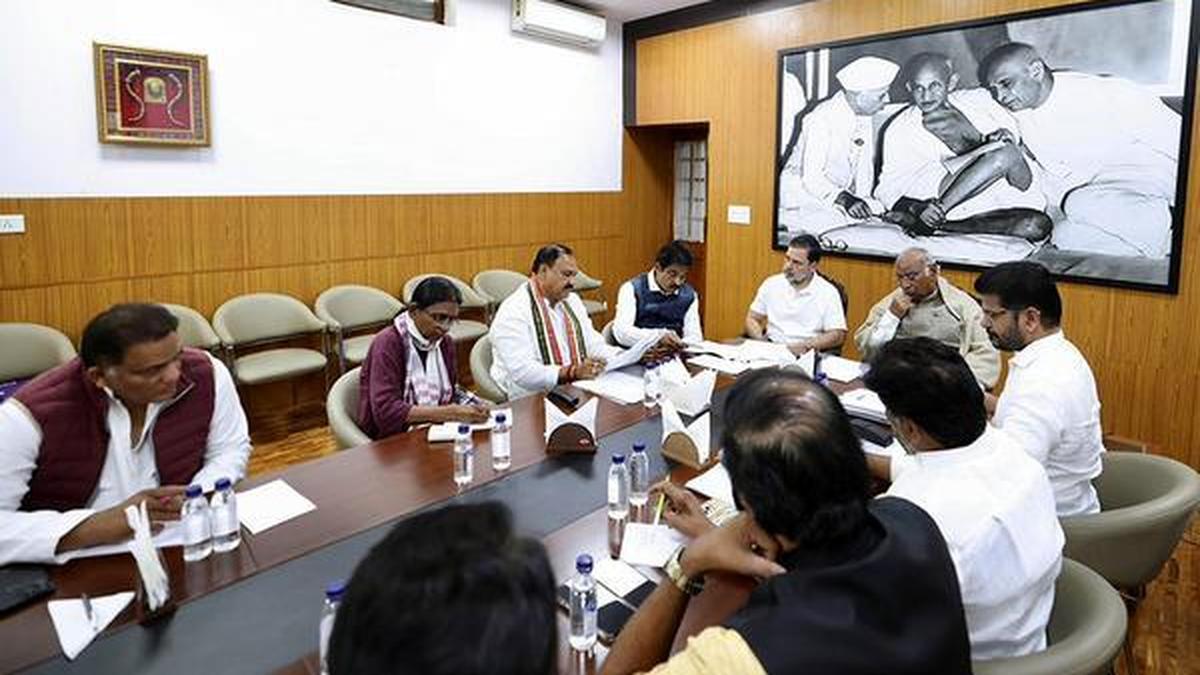
Three former members of the Assam Legislative Assembly, previously suspended from the Indian National Congress, have formally entered the Bharatiya Janata Party (BJP) as the state prepares for its next assembly election. Their move adds a new dimension to an already competitive contest and highlights the fluid nature of party allegiance in Indian politics.
The three legislators—representing constituencies in the western and central parts of Assam—were suspended from the Congress party earlier this year for alleged anti‑party activities. Their suspension followed a series of internal disputes within the state Congress unit, which has struggled to maintain cohesion after a series of electoral setbacks. The BJP, which currently governs both the state and the centre, has been actively courting disaffected opposition leaders as part of its broader strategy to consolidate power in the Northeast.
In a brief ceremony held at the BJP’s state office, each former MLA signed a membership form and publicly pledged support for the party’s election platform. They cited development promises, a focus on infrastructure, and a desire for political stability as key reasons for the switch. The BJP welcomed them as “valued partners” who will help strengthen its grassroots outreach in regions where the party’s vote share has historically been modest.
The three legislators bring with them a combined voter base of roughly 200,000 people, according to constituency data from the last election. While none of them currently hold an active seat—having been suspended—their influence over local party workers and community leaders could prove decisive in tightly contested districts.
Analysts see the move as a calculated effort by the BJP to erode the Congress’s remaining strongholds ahead of the assembly polls. By absorbing former opponents, the ruling party not only weakens its rival’s organizational structure but also sends a signal to other dissatisfied legislators that a switch is both possible and potentially rewarding.
For the Congress, the loss underscores ongoing challenges in rebuilding a cohesive state unit after years of internal factionalism. Party insiders note that the defections may prompt a reassessment of candidate selection and campaign messaging, especially in areas where the BJP has been making inroads through welfare schemes and infrastructure projects.
National and International Relevance
While the event is rooted in state politics, it reflects a broader pattern of political realignment across India. The BJP’s strategy of integrating opposition figures has been observed in several other states, contributing to its expanding dominance at the national level. International observers monitoring India’s democratic processes note that such shifts can affect policy continuity, especially in sectors like trade, energy, and regional security.
Assam’s strategic location near the Siliguri Corridor—often described as the “Chicken’s Neck” linking mainland India to its northeastern states—makes its political stability a matter of interest for neighboring countries and trade partners. A stronger BJP presence could lead to more coordinated infrastructure initiatives, such as road and rail projects that facilitate cross‑border commerce with Bangladesh and Bhutan.
The immediate impact will be felt in the upcoming assembly election campaign. The BJP is likely to field the three former MLAs as candidates or use them as campaign strategists to mobilize voters in their former constituencies. If successful, the party could increase its seat count beyond current projections, potentially securing a larger majority.
Conversely, the Congress may attempt to mitigate the damage by highlighting the defections as evidence of opportunism and a lack of ideological commitment. It could also focus on local issues—such as flood management, tea garden labor rights, and ethnic harmony—to retain its core voter base.
Long‑term, the integration of former opposition legislators could reshape Assam’s political landscape. A more dominant BJP may push for policy alignment with the central government, affecting areas like language education, land acquisition, and resource allocation. This could accelerate development projects but also raise concerns among minority groups wary of cultural homogenization.
The upcoming election will serve as a litmus test for the effectiveness of the BJP’s absorption strategy. Success could encourage similar moves in other states where the Congress and regional parties face internal discord. Failure, however, might reinforce the narrative that voter loyalty remains tied to longstanding party identities rather than individual politicians.
Regardless of the outcome, the episode underscores the importance of party cohesion, leadership credibility, and grassroots connections in India’s vibrant democratic system. As the campaign season intensifies, voters in Assam will weigh promises of development against concerns about political stability and representation.
The three former legislators now stand at a crossroads: they can either become instrumental in delivering the BJP’s agenda in the state or find themselves sidelined if electoral expectations are not met. Their next steps will be closely watched by political strategists across the country, offering a clear example of how individual decisions can ripple through a complex, multi‑party democracy.