Stones hurled at Vande Bharat in UP's Hardoi with RSS chief Mohan Bhagwat on board; windowpane damaged
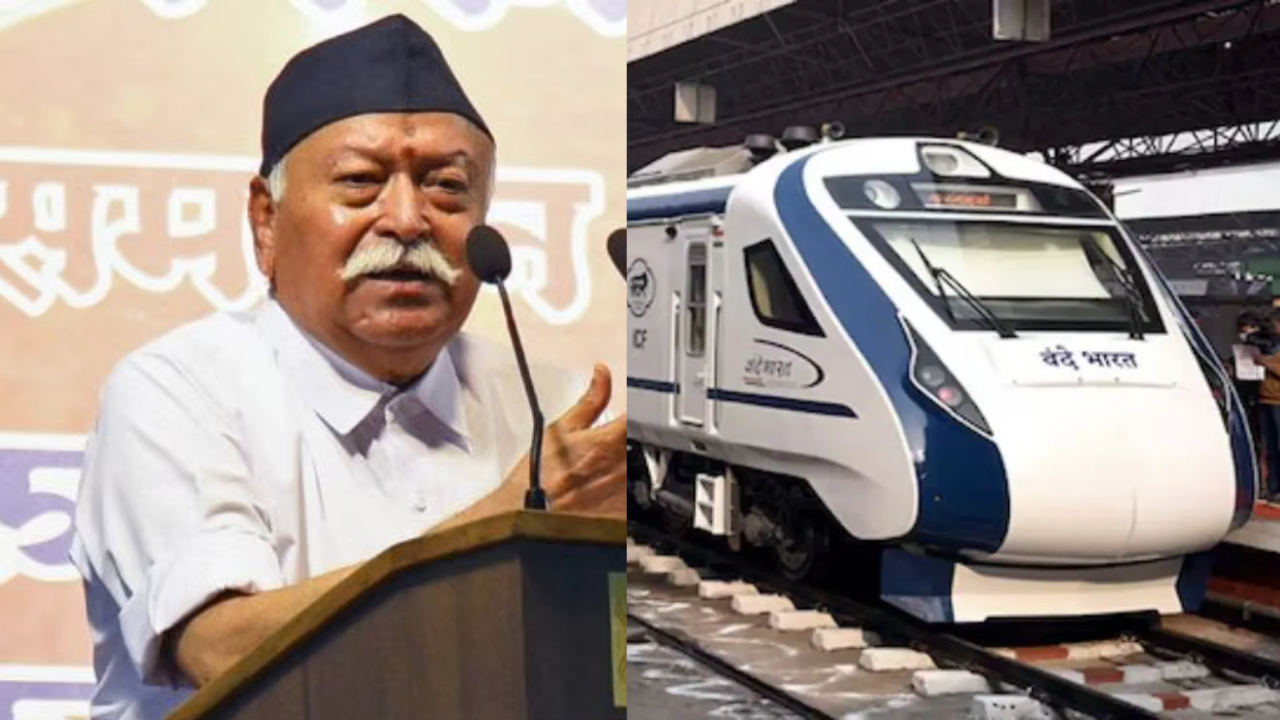
A Vande Bharat Express travelling through Hardi, Uttar Pradesh, was struck by a volley of stones that shattered a windowpane. The incident occurred while senior RSS leader Mohan Bhagwat was on board, prompting immediate security concerns and a swift response from railway officials.
What happened on the train The high‑speed Vande Bharat, known for its modern design and faster travel times, was en route between New Delhi and Lucknow when a group of unidentified individuals threw stones at the train as it passed a rural stretch of track. Several stones hit the train’s side, one of which broke a window in a first‑class coach. Passengers reported a loud shattering sound, and the train briefly slowed to assess the damage. No injuries were reported, and the train resumed its schedule after the window was secured.
Who was on board Mohan Bhagwat, the chief of the Rashtriya Swayamsevak Sangh (RSS), was traveling on the train as part of a scheduled visit to the region. He was seated in a private compartment and was not directly involved in the incident. Bhagwat’s presence added a political dimension to the event, as the RSS is a prominent organization with close ties to the ruling party.
Background on the Vande Bharat Express The Vande Bharat Express, launched in 2019, is India’s first indigenously built semi‑high‑speed train. It represents a key element of the country’s push to modernize its rail network and reduce travel times on major corridors. The train’s sleek design, automatic doors, and onboard amenities have made it a symbol of progress for both the government and the public.
Why the attack matters While stone‑throwing at trains is not new in India, targeting a flagship service like the Vande Bharat raises questions about the safety of high‑profile infrastructure projects. The incident also highlights the vulnerability of rail assets in areas where law‑enforcement presence is limited. For passengers, the event may erode confidence in the perceived security of modern trains, especially when political leaders are present.
Local context and possible motives Hardoi district has seen sporadic unrest linked to land disputes, agricultural grievances, and political rallies. Some analysts suggest the stone‑throwing could be an expression of local frustration, while others see it as an isolated act of vandalism. No group has claimed responsibility, and police investigations are ongoing.
Response from authorities Railway officials immediately dispatched a maintenance crew to replace the damaged pane and inspected the train for further damage. Security teams increased patrols along the route, and local police have filed a case against the perpetrators. The Ministry of Railways issued a statement emphasizing that passenger safety remains a top priority and that steps are being taken to strengthen surveillance on vulnerable sections of track.
Impact on rail security policies The incident is likely to prompt a review of existing security protocols for premium trains. Potential measures include: - Installing CCTV cameras on train exteriors and at stations along high‑risk routes. - Deploying rapid‑response teams equipped to intervene when threats are detected. - Enhancing community outreach programs to encourage local residents to report suspicious activity. These steps align with broader government efforts to modernize rail safety, a sector that carries over 8 billion passengers annually.
Global relevance High‑speed rail projects are expanding worldwide, from Europe’s extensive networks to emerging systems in Southeast Asia and Africa. An incident that targets a flagship train in a large democracy like India draws attention to the universal challenge of protecting rail infrastructure. International investors and technology partners monitor such events closely, as safety concerns can affect decisions on future collaborations and funding.
Economic considerations The Vande Bharat trains are part of a larger plan to boost economic activity by cutting travel time between major cities. Any disruption, even a brief one, can have ripple effects on business travel, tourism, and freight logistics. While the stone‑throwing incident caused only a short delay, repeated security breaches could increase operational costs and deter potential passengers.
Looking ahead Authorities have pledged to increase patrolling and install additional monitoring equipment along the Hardoi‑Lucknow corridor. Railway officials also plan to engage with local community leaders to address underlying grievances that may fuel such acts. For the RSS, the episode is likely to reinforce calls for stronger law‑and‑order measures in rural areas.
Conclusion The stone‑throwing attack on a Vande Bharat Express in Hardoi underscores the delicate balance between showcasing modern infrastructure and ensuring its protection. As India continues to expand its high‑speed rail network, the incident serves as a reminder that security must evolve alongside technology. The swift response from railway officials and the ongoing investigation aim to restore confidence among passengers and demonstrate that even high‑profile journeys can be kept safe.
The episode will be watched closely by policymakers, investors, and rail operators worldwide, all of whom share a common interest in making fast, reliable train travel a secure reality.