Security agencies bust massive 'mule account' network in J&K; fear misuse by terror groups
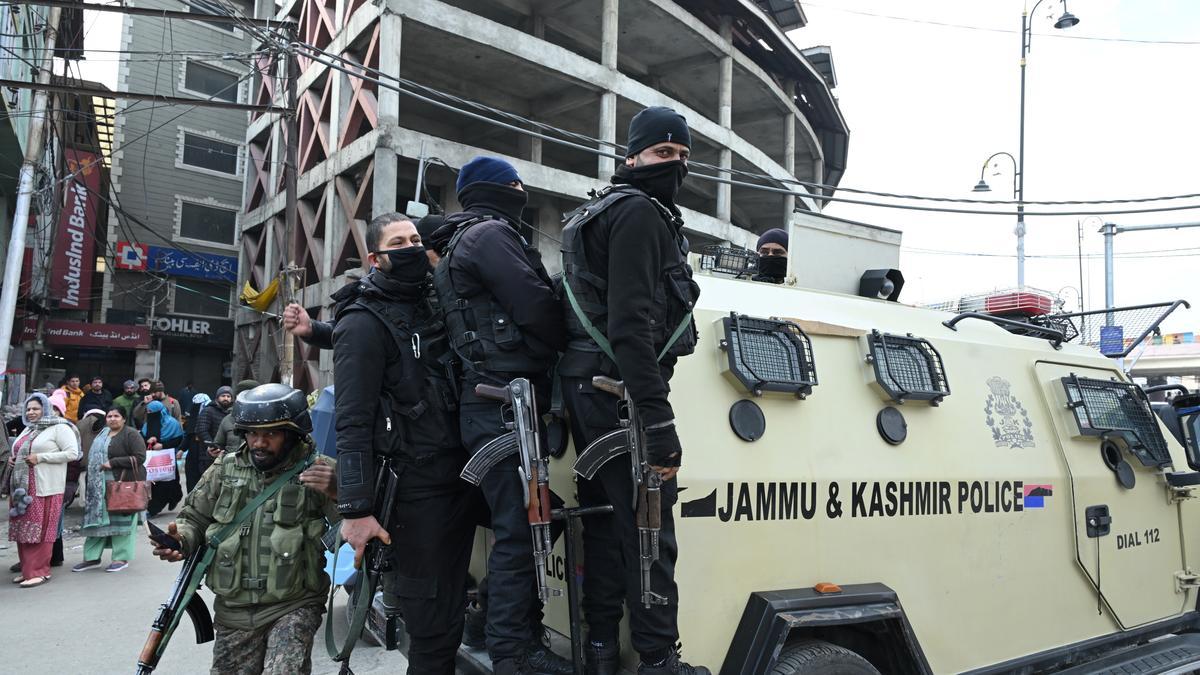
Indian security agencies announced the dismantling of a large‑scale financial mule operation in Jammu and Kashmir, saying the network had moved millions of rupees through fake online accounts. Officials described the ring as one of the most sophisticated they have seen in the region, and warned that its collapse could prevent funds from reaching extremist groups.
Operation overview The raid began after months of surveillance by the National Investigation Agency (NIA) and local police. Teams seized more than 150 smartphones, dozens of bank cards, and a cache of documents that detailed how money was transferred across state lines. Over 80 individuals were taken into custody, including several who acted as middlemen, known locally as "mules," to move money from remote villages to urban centers.
Investigators say the operation was not a simple fraud scheme. Instead, it involved a hierarchy of handlers, recruiters, and cash couriers. The handlers recruited young men and women, often from economically vulnerable backgrounds, promising quick cash for simple tasks such as depositing cash into bank accounts or sending money through digital wallets. The recruited mules rarely understood the source of the funds, making them easy targets for law‑enforcement disruption.
How the network functioned The mule accounts were created on popular payment platforms using forged identity documents. Once an account was active, a courier would deliver cash to a local agent, who would then deposit the money into the fake account. From there, the money was transferred in small, seemingly innocuous amounts to avoid triggering automatic banking alerts. The final destination was a set of offshore accounts linked to a handful of shell companies.
Financial analysts note that the use of multiple small transactions – a technique called "smurfing" – is a common method to evade anti‑money‑laundering (AML) software. By spreading the flow across hundreds of accounts, the network kept each transaction below the reporting threshold set by Indian banks. The operation also exploited gaps in the verification process of newer digital payment apps, which rely heavily on mobile numbers rather than robust KYC (Know Your Customer) checks.
Links to terror financing concerns While the investigation is still ongoing, officials have expressed concern that the funds could have been earmarked for extremist activities. The region has a history of militant financing through informal channels, and the scale of this mule operation raised red flags. Security experts point out that terrorist groups often use legitimate‑looking financial structures to hide the origin of money, making detection difficult.
The agencies involved have not publicly confirmed any direct links to specific terror outfits, but they have warned that the dismantling of the network is a preventive measure. "If left unchecked, such financial channels can become a lifeline for groups seeking to fund violent operations," a senior officer said in a press briefing.
International implications The bust has drawn attention beyond India's borders. Financial crime is a global issue, and the methods used by the J&K ring mirror tactics observed in other parts of the world, including Southeast Asia and the Middle East. International watchdogs, such as the Financial Action Task Force (FATF), have urged member countries to tighten digital payment regulations and improve cross‑border data sharing.
Experts say the case underscores the need for stronger cooperation between technology firms, banks, and law‑enforcement agencies. "When a criminal network can exploit a weak link in the payment ecosystem, the risk spreads to the entire financial system," noted a senior analyst at a global consulting firm.
Next steps and challenges Following the arrests, authorities have begun the process of freezing the seized accounts and tracing the remaining funds. Courts are expected to charge the accused under the Prevention of Money‑Laundering Act and other relevant statutes. Legal experts caution that prosecuting mule operators can be complex, as many are low‑level participants who may claim ignorance of the larger scheme.
The government has announced plans to launch a dedicated task force to monitor digital payment platforms for suspicious activity. The task force will work closely with the Reserve Bank of India to tighten KYC norms and introduce real‑time monitoring tools for high‑risk transactions.
Civil society groups have welcomed the crackdown but also called for safeguards to protect vulnerable individuals who may be coerced into becoming mules. They argue that without socioeconomic support, communities in remote areas may continue to be targeted by criminal recruiters.
Looking ahead The dismantling of this mule network sends a clear signal that financial crimes tied to security threats will be met with swift action. However, the evolving nature of digital payments means that law‑enforcement agencies must continuously adapt their strategies.
For the public, the case serves as a reminder to verify the legitimacy of any financial request, especially when it involves depositing cash into unfamiliar accounts. As technology advances, the line between legitimate digital transactions and illicit money movement can blur, making vigilance essential.
In the coming months, the success of the investigation will be measured not only by the number of convictions but also by the ability of authorities to close the loopholes that allowed the network to thrive. If the new regulatory measures prove effective, they could become a model for other regions facing similar challenges.
The broader lesson is clear: robust financial oversight, combined with community awareness, is crucial to preventing the misuse of payment systems for extremist financing. The recent operation demonstrates that coordinated action across agencies can disrupt even the most intricate money‑moving schemes, protecting both national security and the integrity of the financial sector.