'Promoted separatism': ABVP activists vandalise Azim Premji University campus over Kashmir discussion
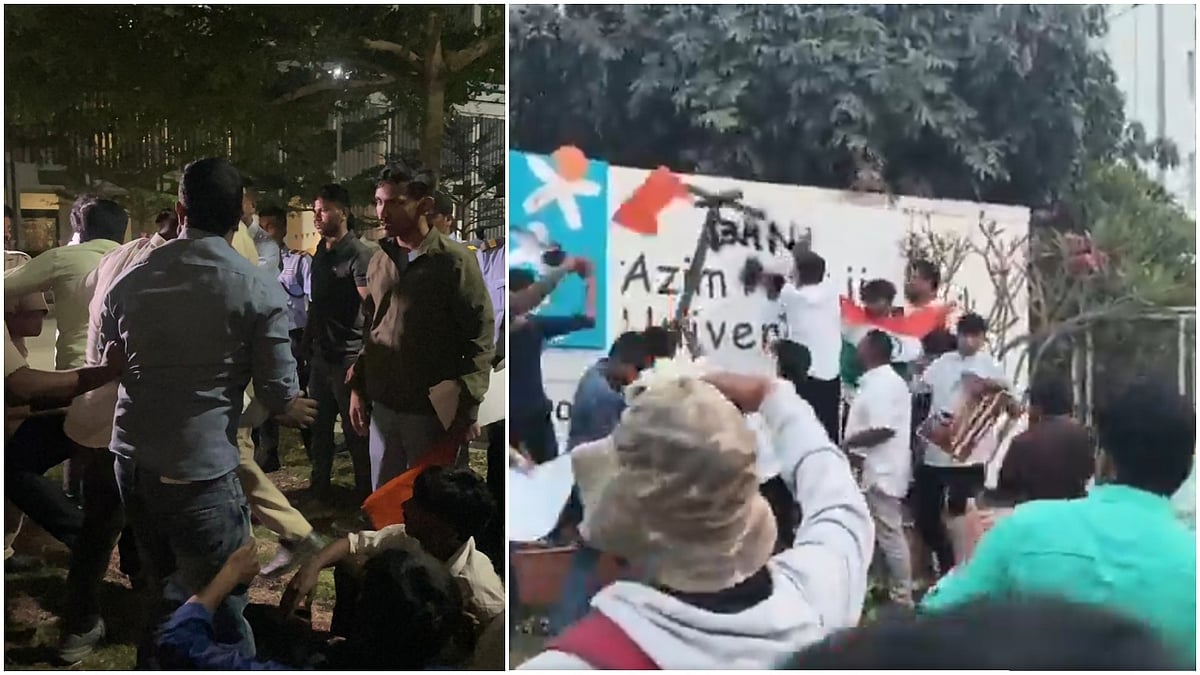
Student activists from the Akhil Bharatiya Vidyarthi Parishad (ABVP) entered the Azim Premji University campus in Bengaluru, breaking windows, scattering furniture and leaving graffiti after a panel on Kashmir was halted. The incident, which left several classrooms damaged, has ignited a debate over the limits of protest, the safety of academic spaces and the broader discourse on the disputed region.
Azim Premji University, known for its focus on education and social development, invited a panel of scholars and journalists to discuss recent developments in Kashmir. The event was part of a series of campus talks aimed at encouraging critical thinking on contemporary issues. In recent months, discussions on Kashmir have become increasingly polarized across Indian campuses, with student groups on both sides of the political spectrum organizing rallies, petitions and, at times, confrontations.
The ABVP, a student wing of a major national political party, has a history of activism on campuses. While it often frames its actions as defending national unity, critics argue that the group sometimes resorts to intimidation to silence dissenting voices. The university’s decision to host a panel that included voices perceived as sympathetic to Kashmiri autonomy was seen by the ABVP as crossing a line.
According to eyewitnesses, a group of around twenty ABVP members arrived at the university shortly after the panel began. They shouted slogans, demanded the discussion be stopped and, when staff refused, began smashing glass doors and windows. Chairs were overturned, a projector was smashed, and the walls were scrawled with slogans such as "separatism must end" and "protect the nation". Security personnel attempted to intervene, but the activists quickly dispersed, leaving behind a scene of chaos.
University officials reported that the damage amounted to several thousand dollars, though the exact figure is still being assessed. No injuries were reported, but the psychological impact on students and faculty was palpable. The university announced an immediate suspension of all external events until a security review could be completed.
The incident prompted swift responses from multiple quarters. University leadership condemned the violence, emphasizing the institution’s commitment to free expression and stating that any form of intimidation would not be tolerated. A spokesperson said, "Academic dialogue must be protected, even when the topics are contentious. Violence undermines the very purpose of education."
Student groups unaffiliated with the ABVP expressed solidarity with the affected faculty and called for a transparent investigation. Several student bodies organized a peaceful march on campus, holding placards that read "Learning, not fighting" and "Protect our classrooms".
The ABVP, however, defended its actions as a necessary stand against what it described as "anti-national propaganda". In a statement released on social media, the group claimed that the panel was part of a coordinated effort to spread separatist sentiment among young people and that its members were simply exercising their right to protest.
Legal experts noted that the vandalism could lead to criminal charges under existing laws that prohibit damage to public property and threaten the safety of educational institutions. Human rights observers warned that labeling dissenting opinions as "separatism" can create a chilling effect on free speech, especially in academic settings.
Why It Matters Globally
While the event took place on a single Indian campus, it reflects a larger global trend where universities become battlegrounds for political ideologies. Similar incidents have been reported in other democracies, where student groups clash over issues ranging from climate policy to national sovereignty. The way authorities respond can set precedents for how dissent is managed in higher education.
Moreover, the Kashmir issue remains a point of international attention. The region’s disputed status has implications for human rights, regional security and diplomatic relations between India, Pakistan and other global powers. When campus debates on such topics turn violent, it signals a narrowing space for nuanced discussion and may influence public perception beyond academia.
Potential Future Impact
In the short term, the university is likely to tighten its security protocols, possibly requiring prior approval for all external speakers and increasing campus police presence. Such measures could deter future incidents but also raise concerns about over‑policing and the suppression of legitimate protest.
For the ABVP, the episode may boost its profile among supporters who view the action as a bold defense of national integrity. Conversely, the backlash from other student groups and civil society could lead to internal debates about the efficacy of violent protest as a political tool.
Policymakers may also take note. The incident could prompt lawmakers to revisit regulations governing campus events, balancing the need for security with constitutional guarantees of free speech. Any new legislation will be watched closely by international observers who monitor India’s democratic credentials.
The university has announced plans to hold a town‑hall meeting with students, faculty and security officials to discuss ways to restore a safe learning environment while preserving open dialogue. Experts suggest that building clear guidelines for invited speakers, establishing rapid response teams for conflict de‑escalation, and fostering a culture of respectful debate can help prevent similar occurrences.
As campuses worldwide grapple with increasingly polarized political climates, the Azim Premji University incident serves as a reminder that the line between protest and vandalism can quickly blur. The challenge for educators, administrators and students alike will be to protect the right to speak while ensuring that the physical spaces of learning remain secure and welcoming for all.