Piyush Goyal holds ‘fruitful’ talks with U.S. Commerce Secretary Lutnick, Ambassador Gor
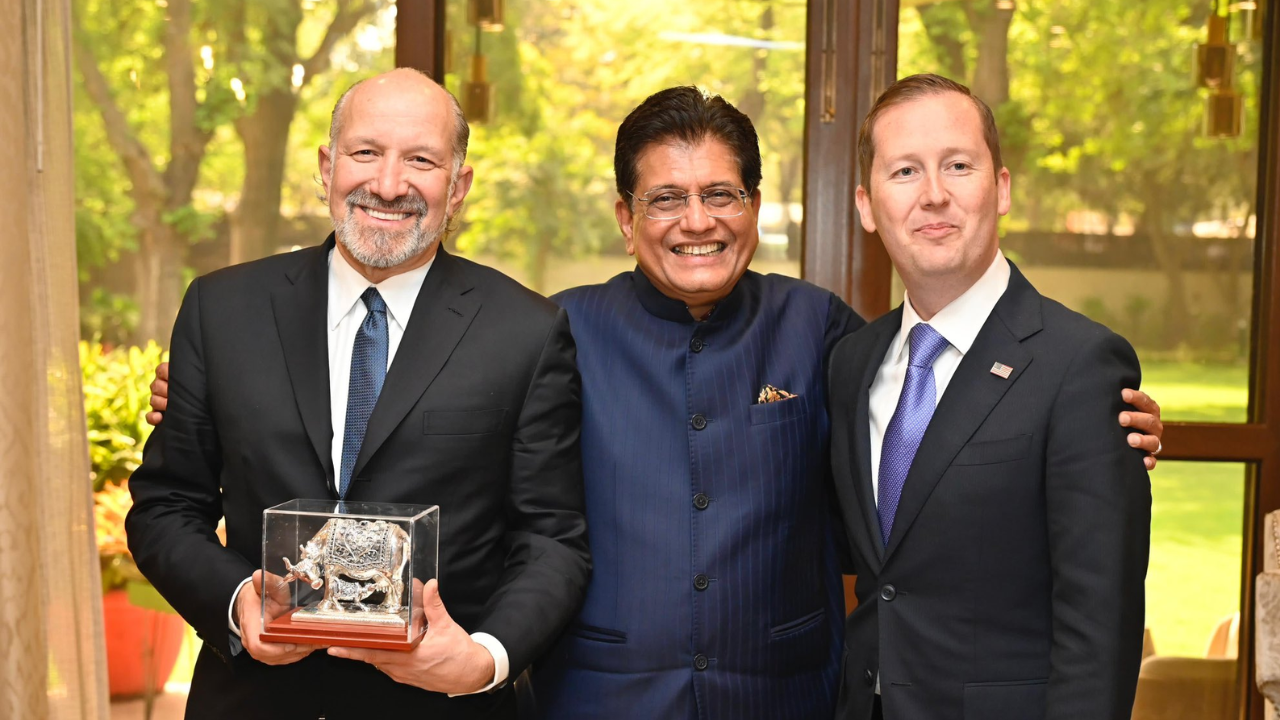
Indian Commerce Minister Piyush Goyal sat down with U.S. Commerce Secretary Lutnick and Ambassador Gor for a series of talks described as “fruitful” by officials. The three leaders focused on expanding bilateral trade, strengthening supply‑chain resilience, and deepening cooperation in clean‑energy technology. Both sides said the dialogue marks a step forward in a relationship that has grown steadily over the past decade.
Background to the meeting
India and the United States have been working to convert a strategic partnership into concrete economic outcomes. Over the last few years, trade between the two economies has risen to over $150 billion annually, and both governments have signed agreements on digital trade, defense procurement, and climate action. Yet challenges remain: tariff barriers, divergent regulatory standards, and concerns about dependence on a narrow set of supply‑chain hubs have limited the full potential of the partnership.
The meeting in New Delhi came after a series of high‑level exchanges in Washington and at multilateral forums. Goyal, who heads India’s Ministry of Commerce and Industry, has been touring major economies to attract investment in manufacturing and green technology. Lutnick, overseeing the U.S. Department of Commerce, has made supply‑chain security a top priority since the pandemic exposed vulnerabilities in critical sectors such as semiconductors and medical equipment. Ambassador Gor, the United States’ senior diplomatic representative in India, has been tasked with smoothing political and commercial ties.
Key topics on the agenda
1. Trade facilitation and market access Both sides agreed to explore ways to reduce non‑tariff barriers that slow the movement of goods. Goyal highlighted India’s efforts to streamline customs procedures through the new “Single Window” system, while Lutnick offered technical assistance to align Indian standards with those used in the United States. The discussion also covered the potential for a “mutual recognition agreement” that could simplify certification for pharmaceuticals, automotive parts, and information‑technology products.
2. Supply‑chain resilience The pandemic and recent geopolitical tensions have pushed governments to rethink how essential components are sourced. Goyal and Lutnick examined joint initiatives to diversify semiconductor manufacturing, with a particular focus on establishing a “fab” ecosystem in India that could serve both domestic and U.S. markets. The conversation extended to critical minerals such as lithium and rare earths, where India’s mining projects could complement U.S. processing capacity.
3. Clean‑energy collaboration Climate change featured prominently. Goyal outlined India’s ambitious target of achieving 450 GW of renewable capacity by 2030, and asked for U.S. expertise in grid integration, battery storage, and offshore wind. Lutnick pledged to channel Department of Energy resources to support pilot projects and to facilitate private‑sector partnerships. Ambassador Gor underscored the role of joint research programs between Indian Institutes of Technology and U.S. national labs.
4. Digital trade and data governance With data becoming a critical economic asset, the trio discussed frameworks for cross‑border data flows that protect privacy while encouraging innovation. Goyal emphasized India’s “Data Protection Bill” as a step toward a balanced regulatory environment. Lutnick offered insights from the U.S. “International Trade Administration” on best practices for data‑centric services such as cloud computing and fintech.
Why the talks matter globally
The outcomes of these discussions could ripple beyond the two nations. A more integrated India‑U.S. supply chain would provide an alternative to China‑centric production networks, potentially reshaping global manufacturing patterns. Strengthened clean‑energy cooperation could accelerate the rollout of technologies needed to meet the Paris Agreement goals, offering a model for other emerging economies.
Moreover, the emphasis on standards harmonization may set a precedent for other trade partners. If India and the United States succeed in aligning certification processes, it could lower costs for multinational firms and encourage smaller companies to enter export markets.
Potential impact on businesses and investors
For Indian exporters, clearer pathways to the U.S. market could translate into higher sales volumes, especially in sectors like pharmaceuticals, textiles, and information technology services. U.S. companies, on the other hand, may find a more predictable environment for investing in Indian manufacturing plants, research centers, and renewable‑energy projects.
Financial markets have already responded positively to the announcement of “fruitful” talks, with Indian equity indices edging higher on expectations of increased foreign direct investment. Analysts note that any progress on a mutual recognition agreement could lift shares of firms that rely heavily on cross‑border certification, such as medical‑device manufacturers and automotive component suppliers.
Next steps and timeline
Both governments said they will set up a joint working group to translate the high‑level dialogue into actionable projects. The group is expected to meet quarterly, starting within the next two months, and will report progress to the respective ministries. Specific milestones include:
Drafting a roadmap for a semiconductor fabrication hub in India by the end of the year. Launching a pilot clean‑energy storage project in Gujarat within six months. * Publishing a joint white paper on data governance and digital trade by early next year.
Ambassador Gor will continue to facilitate coordination among ministries, trade bodies, and private‑sector stakeholders. Goyal indicated that the Indian government is ready to provide fiscal incentives and land parcels for eligible U.S. investors, while Lutnick reiterated the United States’ commitment to a level‑playing field for Indian businesses operating in America.
The meeting reflects a broader shift in global economic strategy, where major economies are seeking diversified, resilient, and sustainable partnerships. If the dialogue moves beyond rhetoric to concrete initiatives, it could deepen the economic interdependence of India and the United States and set a benchmark for future trade negotiations.
For now, the tone remains optimistic. Both sides have signaled a willingness to tackle complex issues together, and the next few months will reveal whether the “fruitful” talks translate into measurable trade growth, technology transfer, and greener energy solutions for both nations.