No START To Check US-Russia Nuclear Arms Race. What It Means For India
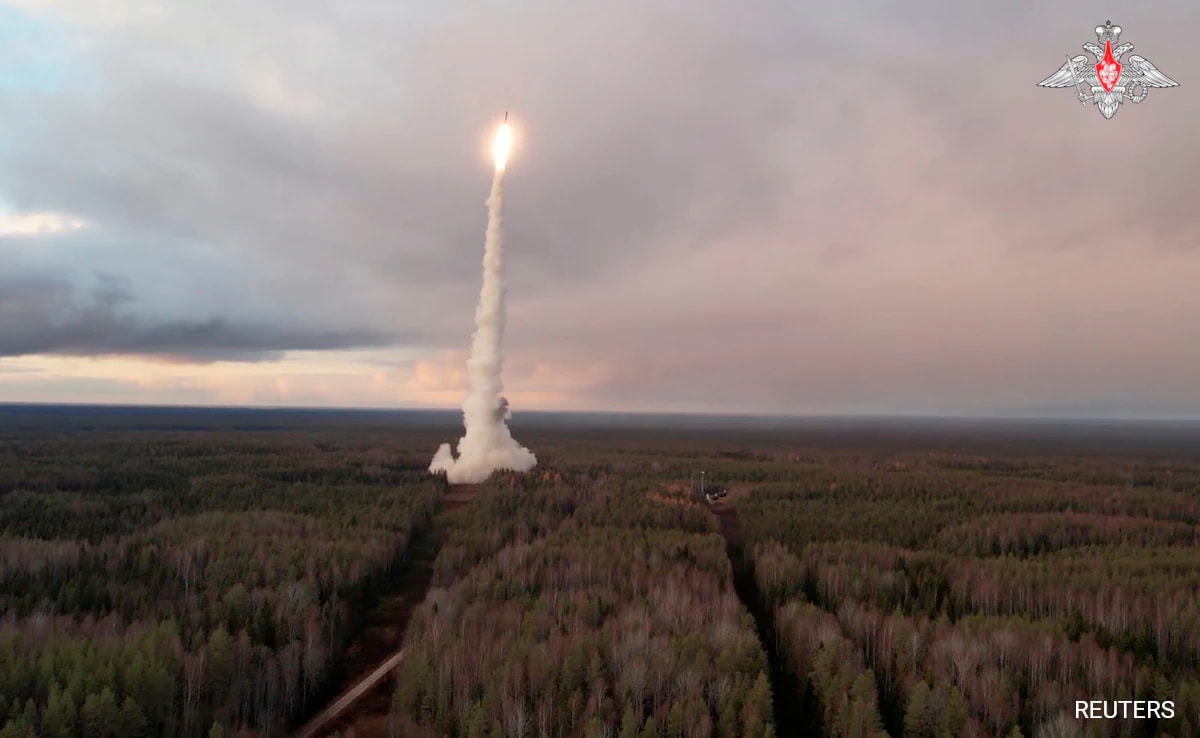
The expiration of the New START treaty has left the United States without a formal, mutually‑accepted system to verify the size and composition of its own and Russia’s strategic nuclear forces. The gap has sparked debate among policymakers, security experts, and allies about how to maintain transparency and reduce the risk of miscalculation in a world where nuclear arsenals remain a central element of national defense.
Background of the New START Treaty
Signed in 2010, the New Strategic Arms Reduction Treaty (New START) capped the number of deployed strategic nuclear warheads for both the United States and Russia at 1,550 and limited the number of delivery vehicles—intercontinental ballistic missiles, submarine‑launched ballistic missiles, and heavy bombers—to 800. Crucially, the treaty established a robust verification regime that included on‑site inspections, data exchanges, and telemetry sharing. These mechanisms gave both sides confidence that the other was adhering to the limits, and they provided a baseline for broader arms‑control discussions.
The treaty’s five‑year extension, agreed to in early 2021, was set to run through early 2026. With no new agreement in place, the United States now faces a period where the formal verification tools that once underpinned strategic stability are no longer active.
Why the Verification System Matters
Verification is more than paperwork; it is a confidence‑building measure that reduces the chance of surprise or misinterpretation. When both sides can confirm the other's compliance, the likelihood of an arms race driven by suspicion diminishes. The absence of such a system means that each nation must rely on intelligence estimates, satellite imagery, and other indirect means to assess the other's capabilities. Those methods, while sophisticated, lack the transparency of direct inspections and can be subject to differing interpretations.
For the United States, the loss of a structured verification framework raises several concerns. First, it complicates the ability to monitor any potential buildup of Russian strategic forces that could shift the balance of power. Second, it hampers the United States’ own ability to demonstrate compliance to its allies, many of whom depend on the treaty’s data to shape their own security policies. Finally, the gap may embolden other nuclear‑armed states to question the value of existing arms‑control agreements, potentially weakening the broader non‑proliferation regime.
Implications for Global Security
The verification void does not exist in isolation. It reverberates through NATO, the United Nations, and regional security arrangements across Asia and the Middle East. NATO members, for instance, have long counted on New START data to calibrate their deterrence posture. Without that data, they may feel compelled to adjust force deployments or increase readiness levels, actions that could be perceived as escalatory.
In the Asia‑Pacific, where China continues to expand its nuclear capabilities, the lack of a U.S.–Russia verification mechanism may push Washington to seek alternative channels for dialogue, possibly with Beijing. Such a shift could reshape the strategic calculus in a region already fraught with flashpoints.
Moreover, the erosion of a cornerstone treaty could set a precedent for other arms‑control accords. The Intermediate‑Range Nuclear Forces (INF) Treaty, for example, collapsed in 2019 amid mutual accusations of non‑compliance. Observers warn that a pattern of treaty decay could undermine the credibility of future agreements, making diplomatic solutions to nuclear risk more difficult to achieve.
Potential Paths Forward
U.S. officials have outlined several options to address the verification gap. One approach is to negotiate a successor treaty that modernizes verification tools to reflect advances in technology, such as satellite‑based monitoring and cyber‑enabled data sharing. Proponents argue that a new framework could be more flexible and less intrusive, addressing concerns that have historically hampered negotiations.
Another possibility is to extend the existing New START framework through a diplomatic extension without a full renegotiation. This would buy time for both capitals to work out technical and political hurdles while preserving the verification regime in its current form.
A third, less conventional route involves bilateral confidence‑building measures outside the treaty structure. These could include voluntary data exchanges, joint exercises, or the establishment of a hotline dedicated to strategic weapons issues. While not as comprehensive as a treaty, such steps could mitigate the most immediate risks of misinterpretation.
All options face obstacles. Domestic political dynamics in both countries have grown more polarized, and each side remains wary of concessions that could be perceived as weakening national security. Additionally, the broader international environment—marked by heightened great‑power competition—makes consensus harder to achieve.
Security scholars emphasize that the verification gap is a “dangerous blind spot” that could increase the probability of accidental escalation. Dr. Elena Kovacs, a senior fellow at the Center for Strategic Studies, notes that “without on‑site inspections, the margin for error widens. Even a small misreading of satellite data could be interpreted as a hostile move.”
Former diplomats stress the diplomatic value of the treaty. “New START was more than a numbers game; it was a channel for communication that kept both sides honest,” says Michael O’Leary, a retired ambassador who helped negotiate the original agreement. “Losing that channel without a ready replacement is a step backward for global stability.”
Conversely, some analysts argue that the United States can rely on existing intelligence capabilities and that the treaty’s verification mechanisms were already limited by political constraints. They suggest that a focus on broader arms‑control issues, such as limiting hypersonic weapons, may be a more fruitful direction.
The coming months will test the ability of Washington and Moscow to bridge the verification gap. Whether through a new treaty, an extension of the current agreement, or ad‑hoc confidence‑building measures, the goal remains the same: to prevent uncertainty from spiraling into conflict.
For allies and adversaries alike, the message is clear—transparency and dialogue are essential to maintaining a stable nuclear order. As the world watches, the United States’ next steps will shape not only its own security posture but also the broader architecture of arms control that has underpinned global peace for decades.
The stakes are high, and the window for decisive action is narrowing. In the absence of a formal verification regime, the onus falls on policymakers to find innovative ways to keep the lines of communication open, ensure mutual confidence, and avoid the pitfalls of a world where the only checks are guesses.