'Master at telling lies': Rahul slams PM Modi over India-US trade deal, flags impact on farmers
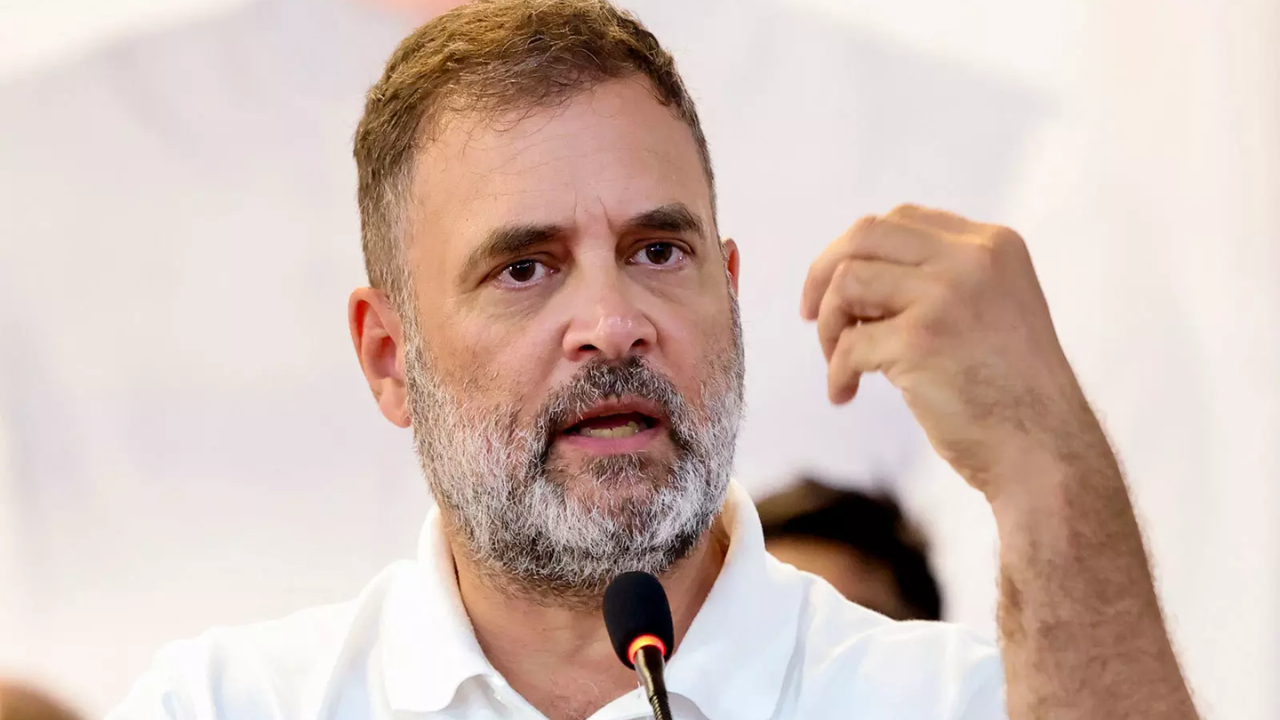
Rahul Gandhi launched a blistering attack on Prime Minister Narendra Modi during a campaign rally in central India, accusing the leader of repeatedly misleading the public. The remarks, delivered to a crowd of supporters, have ignited a fresh wave of political tension as the country heads toward a crucial election cycle.
The speech that sparked the controversy
Speaking from a makeshift stage in the town of Jabalpur, Gandhi warned that the government’s narrative on several key issues – from economic performance to foreign policy – was built on “a series of false promises and distorted facts.” He went on to label Modi as a “master of falsehoods,” a phrase that quickly trended on social media platforms and drew sharp rebukes from the ruling party.
Gandhi’s remarks were part of a broader effort to highlight what his party, the Indian National Congress, describes as a widening gap between official statistics and the lived experiences of ordinary citizens. He cited rising unemployment, stagnant wages, and recent farmer distress as evidence that the government’s claims of development were “out of touch with reality.”
Why the comment matters now
The timing of the speech is significant. India is preparing for general elections that could determine the political landscape for the next five years. Analysts say that any perceived erosion of credibility for the incumbent could influence swing voters in key states such as Uttar Pradesh, Madhya Pradesh, and Bihar.
Moreover, the exchange underscores a growing pattern of confrontational rhetoric in Indian politics. Over the past decade, both sides have increasingly used strong language to mobilize their bases, often at the expense of civil discourse. Gandhi’s choice of words is likely intended to energize his supporters, but it also risks deepening polarization.
Reactions from the ruling party and allies
Prime Minister Modi’s office issued a brief statement describing Gandhi’s comments as “baseless political mud‑slinging.” Senior officials from the Bharatiya Janata Party (BJP) echoed the sentiment, accusing the opposition of attempting to distract the nation from its development agenda.
Several BJP leaders took to televised debates to counter Gandhi’s claims, pointing to recent infrastructure projects, foreign investment inflows, and improvements in health indicators as proof of the government’s progress. They also warned that personal attacks could undermine the democratic process.
International observers weigh in
Foreign diplomats and policy analysts have noted the episode as a barometer of India’s democratic health. A senior fellow at a think‑tank in Washington remarked that “the intensity of the language used by both sides reflects a maturing political system where accountability is being demanded more forcefully.”
However, some observers cautioned that the rhetoric could affect India’s image abroad, especially as the country seeks to attract more foreign capital and strengthen strategic partnerships. Investors often look for political stability, and heightened verbal clashes may raise concerns about policy continuity.
The broader debate on truth in politics
Gandhi’s accusation taps into a global conversation about misinformation and the role of leaders in shaping public perception. In many democracies, voters are increasingly skeptical of official statements, demanding fact‑checking and transparency.
In India, the debate has taken on a uniquely local flavor. The country’s vast media landscape includes both mainstream outlets and a thriving network of regional news channels, many of which are aligned with specific political interests. This environment makes it difficult for citizens to discern unbiased information, amplifying the impact of high‑profile statements like Gandhi’s.
Potential impact on the upcoming election
Political scientists suggest that the controversy could have mixed effects. On one hand, the strong language may rally the Congress base, especially among younger voters who are disillusioned with the status quo. On the other hand, it could alienate moderate voters who prefer a more measured tone.
Election strategists for the BJP are likely to recalibrate their messaging, focusing on development achievements while downplaying personal attacks. They may also intensify outreach in rural areas where the government’s welfare schemes have been well‑received.
Both parties are expected to continue their campaign tours over the next few weeks, with the opposition planning additional rallies that highlight alleged government shortcomings. Meanwhile, the Election Commission has urged candidates to keep the discourse “peaceful and issue‑focused,” warning that any incitement could lead to legal action.
The episode also raises questions about the role of social media in shaping political narratives. Platforms have already flagged several posts containing the phrase “master of falsehoods” for potential misinformation, though they have not removed them pending further review.
Rahul Gandhi’s pointed criticism of Prime Minister Narendra Modi adds another layer to an already charged electoral environment. While the immediate effect may be heightened media attention and a surge in online debate, the longer‑term implications will depend on how voters interpret the exchange and whether it translates into tangible shifts at the ballot box. As India approaches one of its most consequential elections in recent memory, the balance between robust political competition and constructive dialogue will be a key factor in shaping the nation’s democratic trajectory.