International Women’s Day 2026: Why Is The Symbol In Purple, White And Green? | Explained
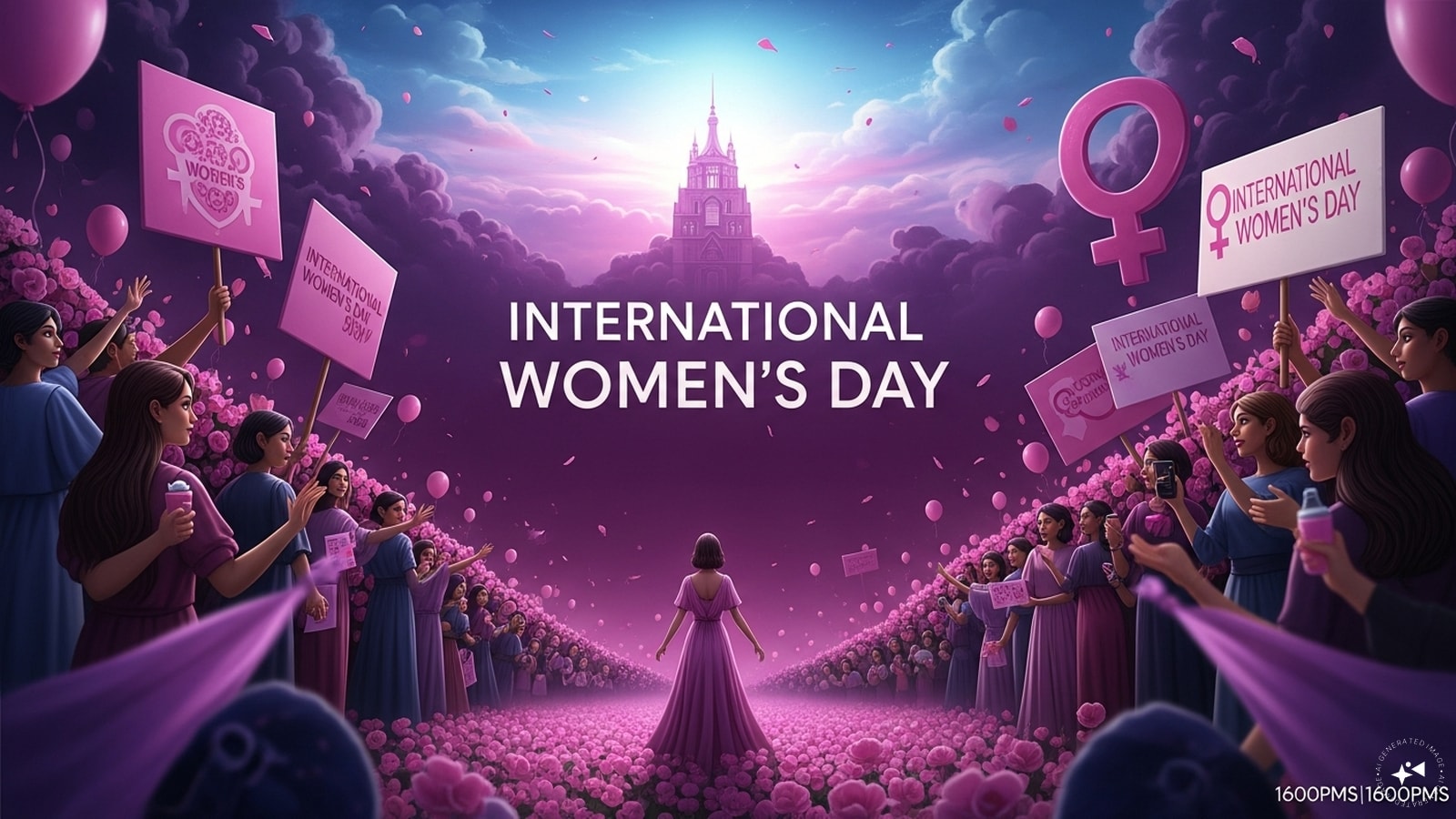
Every year on March 8, streets, social media feeds and office walls light up with a distinctive trio of hues – purple, white and green. The colors are instantly recognisable, but many people wonder where they came from and why they matter.
International Women’s Day began as a labour protest in the early 1900s, when women in the United States and Europe demanded better working conditions, the right to vote and an end to discrimination. The movement grew quickly, spreading from factories in New York to suffragette rallies in London. By the 1910s the day had become a global platform for women’s rights, yet it still lacked a visual identity that could unite activists across borders.
The colour palette was introduced in 1908 by the Women’s Social and Political Union (WSPU), a British suffragette group led by Emmeline Pankhurst. The WSPU chose purple, white and green to create a simple, memorable symbol that could be displayed on banners, sashes and clothing. The three shades were deliberately selected for their symbolic meanings, a practice that mirrored the use of colour in other social movements of the era.
Purple, the most striking of the three, was associated with dignity and justice. In the language of heraldry, purple has long signified royalty and high status, a fitting choice for a cause that demanded respect for women’s contributions to society. Suffragettes used purple ribbons and sashes to signal their demand for equal treatment under the law.
White represented purity, a value that the early movement believed would counteract the negative stereotypes aimed at women activists. At the time, critics often painted suffragettes as immoral or reckless. By embracing white, the WSPU sought to reclaim the notion of purity as a source of moral authority rather than a tool of oppression.
Green stood for hope and the promise of a better future. It symbolised the growth of the movement and the belief that, with perseverance, society could change. Green banners fluttered alongside the other colours during marches, reinforcing the idea that progress was not only possible but inevitable.
The colour scheme travelled beyond Britain as the International Women’s Day movement expanded. In the United States, the National Woman’s Party adopted the same palette for its 1913 parade in Washington, D.C. In the 1920s, activists in India, South Africa and Latin America began using purple, white and green in their own demonstrations, linking local struggles to a shared visual language.
In 1975, the United Nations declared March 8 an official international day of observance. The UN’s Women’s Programme embraced the historic colours, incorporating them into official logos, publications and promotional material. By aligning the UN brand with the established palette, the organization gave the colours a new level of legitimacy and global reach.
Today the trio of hues is more than a decorative choice; it functions as a branding tool that instantly signals the day’s purpose. Campaigns on social media use the hex codes #800080 (purple), #FFFFFF (white) and #008000 (green) to create cohesive graphics that can be shared worldwide. The consistency helps messages cut through the noise of a crowded digital landscape, ensuring that calls for gender equality are recognised at a glance.
The visual impact also aids education. Schools and community groups often use coloured ribbons or posters to teach students about the history of women’s rights. The colours provide a simple mnemonic device: purple for justice, white for purity, green for hope. This makes the abstract concept of equality easier for younger audiences to grasp.
Not everyone agrees with the palette. Some contemporary activists argue that the original meanings – especially the notion of “purity” – are outdated or even counter‑productive. They propose alternative schemes that focus on empowerment without invoking historical gendered expectations. Nevertheless, the three‑colour motif remains the most widely recognised symbol for International Women’s Day, largely because of its deep roots and the massive institutional support it receives.
Looking forward, the colour palette is likely to stay relevant, but its usage may evolve. Designers are already experimenting with gradient versions that blend the three shades, creating a modern aesthetic while preserving the historic link. Digital platforms are also developing animated stickers and filters that incorporate the colours, giving the movement fresh ways to engage younger audiences.
The endurance of purple, white and green shows how a simple visual cue can become a powerful rallying point for a global cause. By reminding people of the movement’s origins, the colours help keep the conversation about gender equality alive, even as the specific challenges shift from voting rights to pay equity, reproductive health and digital safety.
In a world where visual branding often drives attention, the three‑colour scheme offers a timeless reminder that the fight for women’s rights is both historic and ongoing. Whether displayed on a protest banner, a corporate website or a personal Instagram story, the hues continue to signal a collective demand for justice, hope and respect for women everywhere.