India news: Army claims Pakistani militant killed in Kashmir
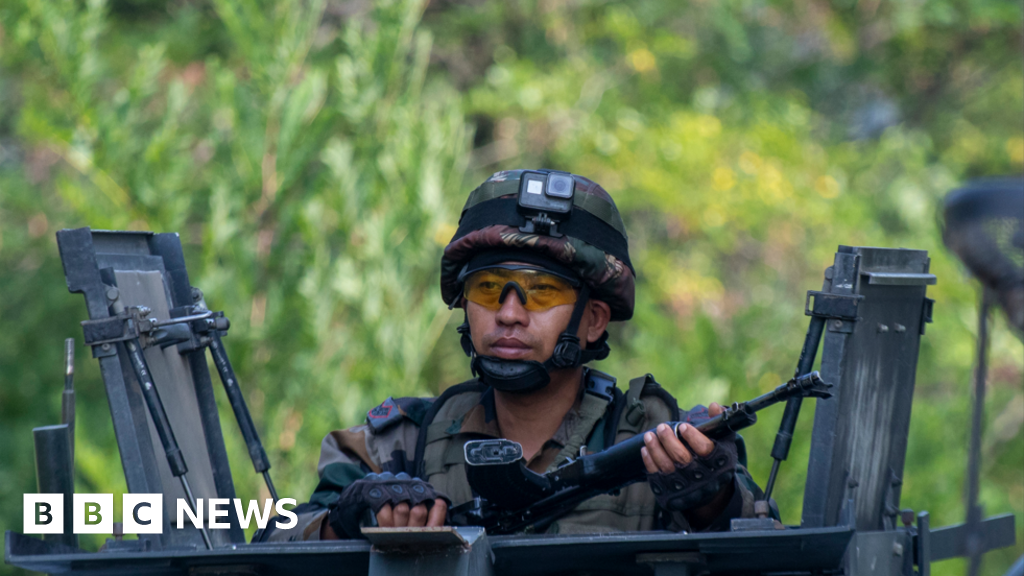
The Indian army announced that its troops eliminated a Pakistani militant during an operation in the contested Kashmir valley. The statement, released by the army’s public relations wing, said the encounter took place in a remote area of the Line of Control (LoC) and resulted in the death of the suspect, identified as a member of a Pakistan‑based extremist group.
The LoC, a de‑facto border that separates Indian‑administered Kashmir from Pakistan‑administered territory, has long been a flashpoint for cross‑border firing and infiltration attempts. Both sides maintain a heavy military presence, and any incident along the line is quickly amplified in regional media and diplomatic circles. The latest claim adds to a series of recent skirmishes that have kept the area on high alert.
According to the army’s briefing, the operation was part of a routine patrol aimed at monitoring infiltration routes used by militants. Intelligence inputs reportedly indicated that a small group of armed men had entered the Indian side of the LoC. When the patrol confronted the group, a brief exchange of fire ensued, leading to the death of the Pakistani national. The army said its personnel suffered no casualties.
The militant’s identity was not immediately disclosed, but officials linked him to Lashkar‑e‑Taiba, a Pakistan‑based organization that has claimed responsibility for several attacks in India over the past decade. The group is designated as a terrorist organization by both India and the United States. By naming the suspect’s affiliation, the army underscored its ongoing effort to dismantle networks that operate across the border.
Pakistan’s foreign ministry responded with a statement that the death of its citizen was “unfortunate” and called for restraint on both sides. The ministry urged India to adhere to the 1972 Simla Agreement, which calls for the resolution of disputes through peaceful means. While the Pakistani response was measured, it highlighted the delicate diplomatic dance that follows each incident along the LoC.
Analysts say the episode could have several implications for regional stability. First, it reinforces India’s narrative that Pakistan continues to sponsor or harbor militants who target Indian security forces. Second, the incident may prompt both militaries to increase surveillance and patrol activities, raising the risk of accidental escalation. Third, the episode could influence ongoing diplomatic talks, including the stalled bilateral dialogue on the Kashmir issue.
The international community watches these developments closely. The United States, which maintains strategic ties with both New Delhi and Islamabad, has repeatedly urged restraint and dialogue. A senior U.S. official, speaking on condition of anonymity, said the incident "underscores the need for confidence‑building measures to prevent inadvertent clashes that could spiral into a larger conflict."
In New Delhi, the government reiterated its stance that any infiltration attempt will be met with decisive action. A senior defence official emphasized that the army’s primary duty is to protect the nation’s borders and that such operations are essential to deter future threats. The statement also highlighted ongoing efforts to modernize border infrastructure, including the installation of advanced surveillance systems.
On the ground, residents of nearby villages expressed a mixture of relief and anxiety. While many welcomed the removal of a perceived threat, they also voiced concern over the constant presence of armed forces and the disruption to daily life. A local shopkeeper noted that frequent curfews and roadblocks have become a part of routine, affecting livelihoods and schooling.
The incident arrives at a time when both India and Pakistan are navigating internal political challenges. In India, the government is focusing on economic reforms and infrastructure projects, while also seeking to project a strong security posture. In Pakistan, the civilian leadership faces pressure to address militant groups operating within its borders, a task complicated by complex civil‑military relations.
Looking ahead, experts suggest that the situation could evolve in several ways. If diplomatic channels remain open, the two capitals may engage in low‑level talks to establish clearer protocols for handling future encounters. Conversely, a series of similar incidents could harden public opinion on both sides, making compromise more difficult. The role of third‑party mediators, such as the United Nations or regional powers, may become more prominent if tensions rise.
In the meantime, the Indian army’s claim serves as a reminder of the fragile peace that exists along the LoC. While the immediate outcome is the removal of a single militant, the broader narrative continues to be shaped by each encounter, each statement, and each diplomatic response. As the region remains under close watch, the hope among many observers is that measured actions and sustained dialogue will prevent further loss of life and keep the border from slipping into open conflict.