India condemns Pakistan's airstrikes on Afghan territory
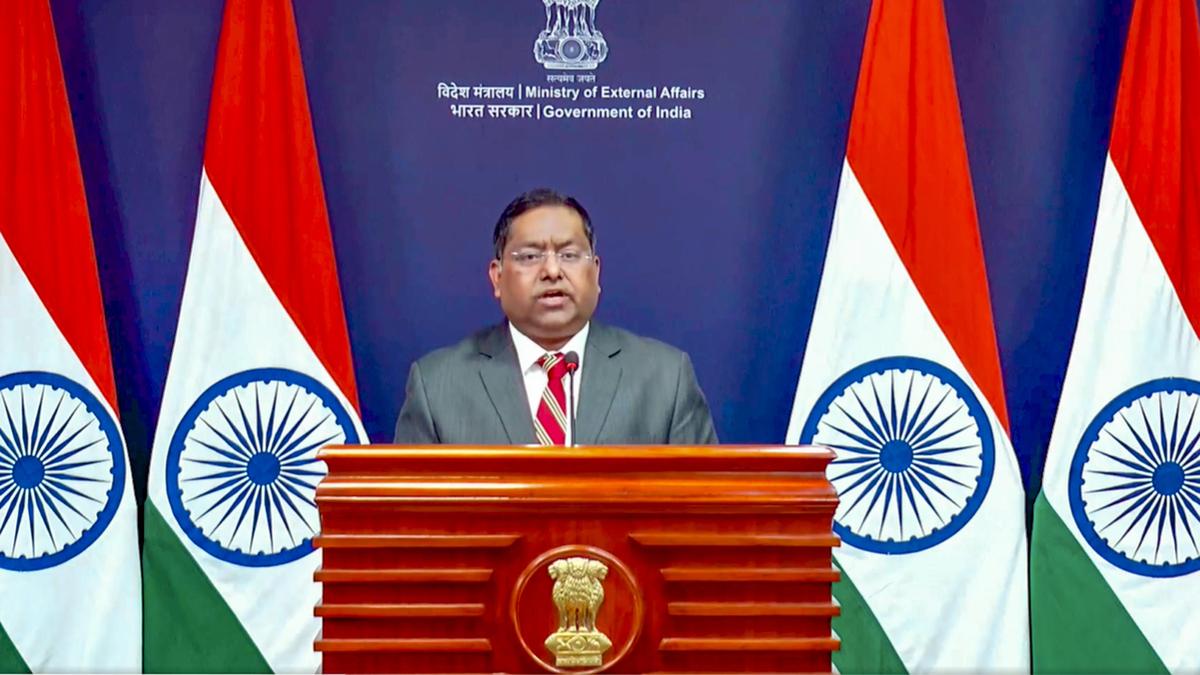
India’s foreign ministry issued a sharp rebuke after reports of Pakistani aircraft striking targets inside Afghanistan. The statement called the attacks a violation of Afghan sovereignty and a breach of international norms, and warned that such actions could destabilise an already fragile region.
Afghanistan has been caught in a web of cross‑border tensions for decades. The porous border with Pakistan, known as the Durand Line, has long been a conduit for insurgent groups, smuggling networks and occasional military incursions. While both nations have signed agreements to respect each other’s territorial integrity, sporadic violations have occurred, often linked to counter‑terrorism operations or proxy conflicts.
India, which maintains a strategic partnership with the Afghan government, has repeatedly voiced concern over any external interference that could undermine Kabul’s stability. The latest incident adds a new layer of complexity, drawing India into a diplomatic dispute that also involves Pakistan’s security calculus.
According to multiple sources, a squadron of Pakistani fighter jets crossed into Afghan airspace on Thursday and conducted airstrikes near the border town of Spin Boldak. The strikes targeted what Pakistan described as “terrorist hide‑outs” linked to groups operating against its security forces. Afghan officials, however, denied the presence of any militant camps in the area and condemned the violation as an act of aggression.
India’s response was swift. In a formal communiqué, the Ministry of External Affairs stated that the airstrikes “contravene the principles of sovereignty and non‑interference enshrined in the United Nations Charter.” The ministry urged Pakistan to halt any unilateral military actions and to engage in dialogue through established diplomatic channels.
Regional implications
The incident has immediate ramifications for South‑South relations. Pakistan’s security establishment argues that cross‑border raids are necessary to neutralise threats that spill over from Afghanistan into its territory. India, on the other hand, views such moves as destabilising, especially given the delicate balance of power in Kabul.
Analysts note that the strikes could embolden militant factions on both sides of the border. If Afghan groups perceive Pakistan as an aggressor, they may intensify attacks against Pakistani interests, creating a feedback loop of retaliation. Conversely, Pakistan’s military may feel compelled to increase aerial surveillance and occasional strikes, further eroding trust.
The broader South Asian security environment could also feel the ripple effects. Both nations are nuclear‑armed, and any escalation—however limited—carries the risk of miscalculation. The international community, particularly the United Nations and the Shanghai Cooperation Organisation, has called for restraint, emphasizing that any military action should be coordinated with the Afghan government.
International response
Beyond the regional players, global powers have taken note. The United States, which maintains a residual diplomatic presence in Afghanistan, urged both Islamabad and Kabul to respect international law and avoid actions that could inflame the conflict. European Union officials echoed similar sentiments, highlighting the need for a political solution to the Afghan security dilemma.
China, a key investor in Pakistan’s infrastructure projects, expressed concern over any development that could threaten regional stability. In a brief statement, the Chinese foreign ministry urged “all parties to resolve disputes peacefully and to uphold the sovereignty of Afghanistan.”
These reactions underscore a common diplomatic thread: the preference for dialogue over force. While no nation has directly condemned India’s stance, the consensus leans toward de‑escalation and the use of established mechanisms such as the Islamabad‑Kabul talks.
Looking ahead, several scenarios could unfold. One possibility is a diplomatic outreach by Afghanistan, seeking assurances from Pakistan that further air incursions will cease. Such a move could be facilitated by third‑party mediators, including the United Nations Assistance Mission in Afghanistan (UNAMA).
Another route involves India leveraging its diplomatic channels to press Pakistan for a formal apology and a commitment to respect Afghan airspace. India may also consider raising the issue in multilateral forums, thereby increasing pressure on Pakistan to adhere to international norms.
If tensions rise, there is a risk of a broader security clampdown. Pakistan could increase ground patrols along the border, while Afghan forces might respond with heightened vigilance and possible retaliatory strikes. Such a spiral would jeopardise humanitarian aid routes, disrupt trade, and exacerbate the already precarious economic situation in Afghanistan.
Conversely, a measured response could pave the way for renewed confidence‑building measures. Both sides might agree to joint monitoring of the border, share intelligence on extremist groups, and establish a rapid‑communication hotline to prevent accidental engagements.
India’s condemnation of Pakistan’s airstrikes highlights the fragile nature of South Asian security dynamics. The incident serves as a reminder that any unilateral military action in a region already riddled with insurgency and political uncertainty can have far‑reaching consequences. By calling for restraint and diplomatic engagement, India aligns itself with a broader international call for stability.
The coming weeks will test the willingness of Pakistan, Afghanistan and their regional partners to prioritize dialogue over force. A peaceful resolution could reinforce the norms of sovereignty and non‑interference, while a failure to de‑escalate may deepen mistrust and fuel further instability across the subcontinent.