Imran Khan was offered deals twice, claims Pak PM Shehbaz Sharif's close aide: 'Serious attempts made but...
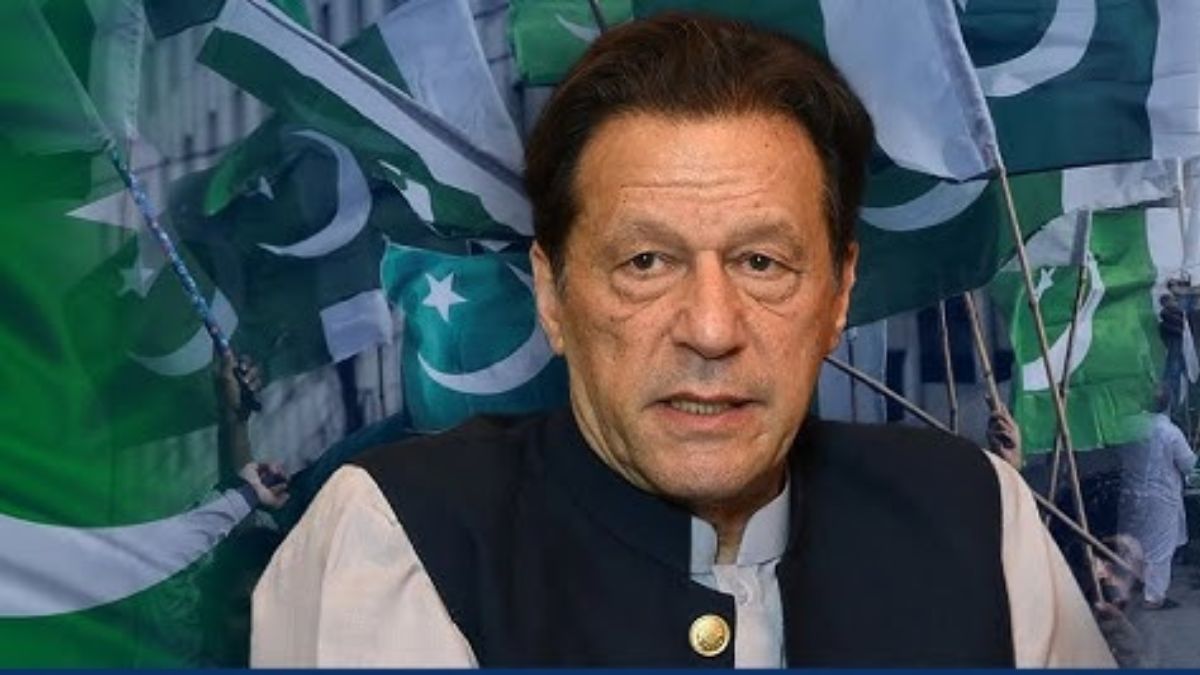)
A senior aide to Pakistan’s prime minister has said that former premier Imran Khan was approached twice with political deals that could have eased his ongoing legal and political challenges. The aide, who works closely with Shehbaz Sharif, described the offers as "serious attempts" to bring stability to a nation that has seen repeated protests, court battles and a volatile political climate.
Background to the claims
Imran Khan, the charismatic former cricketer who entered politics in the late 1990s, served as Pakistan’s prime minister from 2018 until his ouster in a parliamentary vote of no confidence in April 2022. Since then, he has faced a series of corruption cases, a high‑profile treason charge and several arrests that have sparked mass rallies and counter‑rallies across the country. His supporters view the legal actions as politically motivated, while his opponents argue that they are necessary to uphold the rule of law.
The current government, led by Shehbaz Sharif, has repeatedly called for dialogue with Khan’s Pakistan Tehreek‑e‑Insaf (PTI) party. The Sharif administration says it wants to restore normalcy, protect the economy and avoid further street violence. It is within this context that the aide’s statements were made.
Speaking to reporters in Islamabad, the aide, who asked to remain unnamed for security reasons, said that two distinct proposals were put on the table for Khan. The first, according to the aide, involved a conditional amnesty that would have allowed Khan to return to the political arena without facing immediate detention, provided he agreed to a public apology and a commitment to refrain from inciting unrest.
The second offer, the aide added, was a more detailed political arrangement. It would have seen Khan’s PTI join a broad‑based coalition government, with key ministries allocated to the party in exchange for Khan’s cooperation in passing critical economic reforms. The aide emphasized that both proposals were discussed at senior levels and that “serious attempts were made” to reach an agreement.
Why the deals did not materialise
According to the aide, negotiations stalled because of deep mistrust on both sides. Khan’s camp, he said, was reluctant to accept any deal that could be seen as a concession to the establishment, fearing it would weaken his anti‑establishment image. On the other hand, the Sharif government was wary of granting too much power to a party that it still considered a potential threat to its own political survival.
The aide declined to provide details about who within the government or the military was involved in the talks, but hinted that senior officials from the Ministry of Interior and the Office of the Prime Minister were part of the outreach.
Regional and global significance
Pakistan’s political turbulence has long been a concern for neighboring countries and international investors. The country’s economy, already strained by high inflation and a balance‑of‑payments crisis, depends heavily on foreign aid and investment. Continued unrest threatens to delay reforms that the International Monetary Fund (IMF) expects Pakistan to implement as part of its loan program.
If a deal had been reached, analysts say it could have paved the way for a more predictable policy environment, potentially encouraging foreign direct investment and stabilising the rupee. Conversely, the failure to reach an agreement keeps the political deadlock alive, raising the risk of further street protests and possible disruptions to energy supplies that affect the broader South Asian region.
The United States and European nations have repeatedly urged Pakistan to maintain democratic norms and avoid the use of the judiciary for political ends. The claims of behind‑the‑scenes negotiations add a new layer to diplomatic conversations, as foreign ministries assess whether the Pakistani leadership is willing to compromise for the sake of stability.
Possible future scenarios
The aide’s revelations could influence the next steps taken by both Khan and the Sharif government. One possibility is that the former prime minister will use the information to pressure the current administration into offering a more favorable deal, especially if his supporters interpret the statements as evidence that the government is willing to negotiate.
Another scenario involves a hardening of positions. If Khan’s camp believes that the offers were insufficient or insincere, they may double down on street protests, further polarising the electorate. The government, in turn, could respond with stricter enforcement of court orders, leading to more arrests and a potential escalation of violence.
A third outcome could be mediated dialogue facilitated by a neutral third party, such as a senior former judge or an international organization. Such a process would aim to address the core grievances of PTI while ensuring that legal proceedings continue in a transparent manner.
Political analysts in Islamabad note that behind‑the‑scenes deals are not unusual in Pakistan’s history, where coalition governments have often been formed through informal agreements. However, the current climate is different because of the intensity of public emotions surrounding Khan’s legal cases.
"Any deal that does not address the underlying trust deficit will be short‑lived," said Dr. Ayesha Malik, a senior fellow at a regional think‑tank. "The government must balance the need for stability with the perception that justice is being served."
Economists warn that prolonged uncertainty could push the country closer to a balance‑of‑payments crisis. "Investors look for predictability," said Faisal Ahmed, a market analyst. "Without a clear political roadmap, capital outflows are likely to continue.
The aide’s claim that Imran Khan received two serious offers underscores the complexity of Pakistan’s political landscape. While the proposals did not lead to a settlement, they reveal that both sides recognize the cost of continued deadlock. How the government and Khan’s party respond in the coming weeks will shape not only domestic stability but also Pakistan’s economic prospects and its relationships with regional and global partners.